


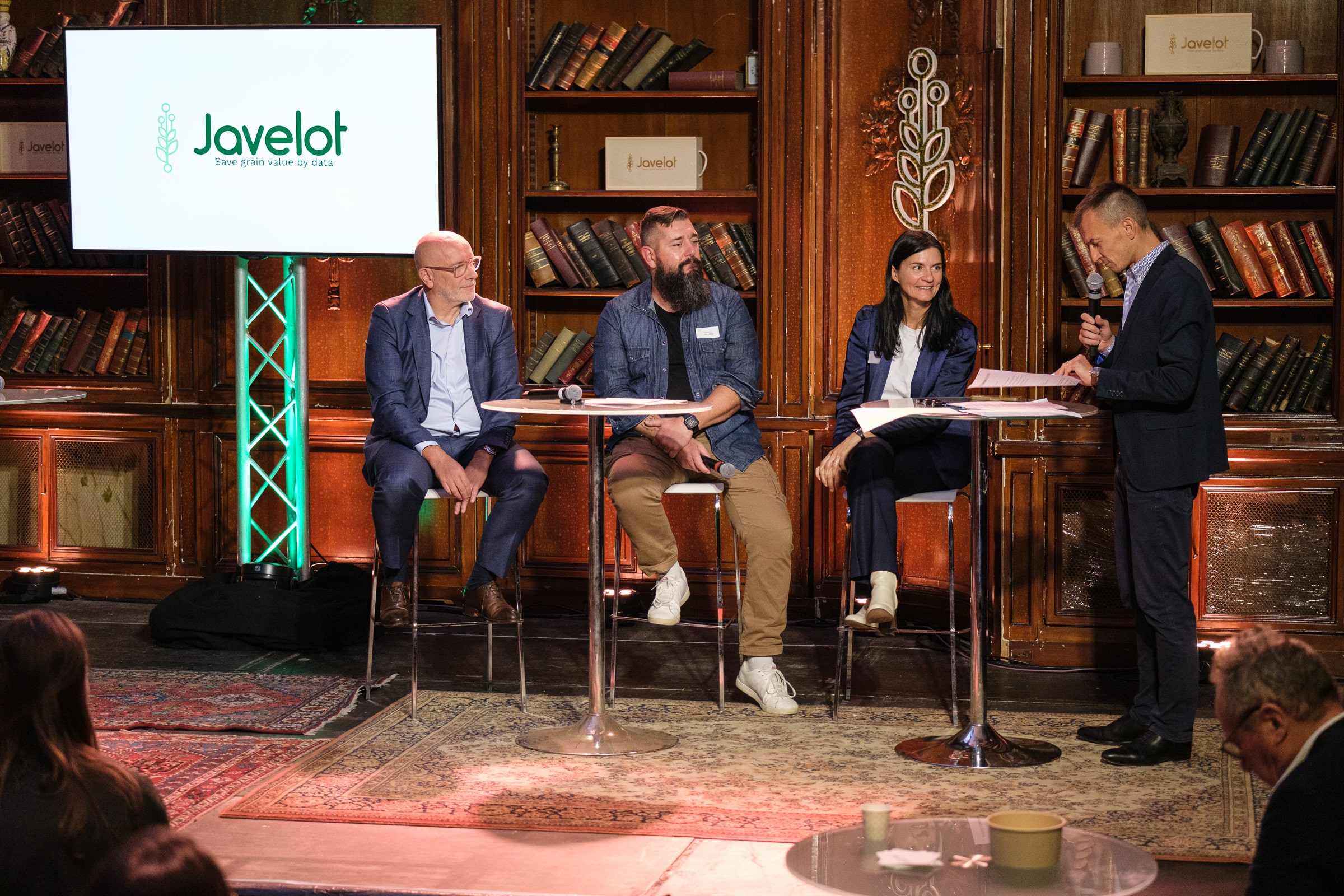
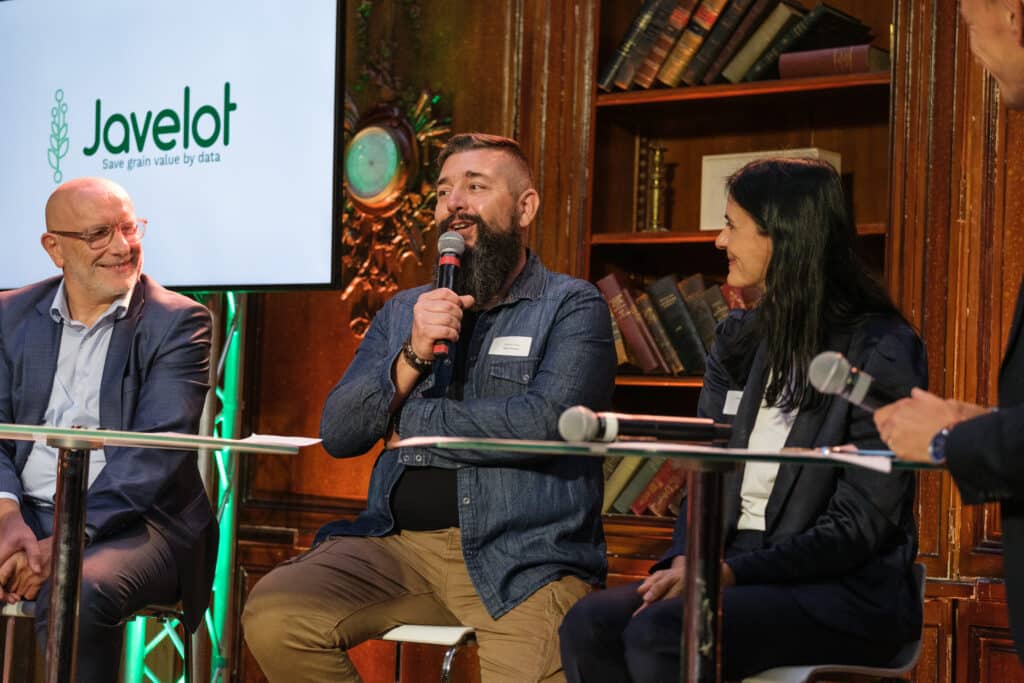
Across Europe, generational renewal has become a major challenge. And it does not concern agricultural production alone: it also affects post-harvest professions, collection, storage, quality, maintenance, logistics, those essential links between the field and the plate. With this in mind, Javelot hosted a roundtable entitled “Harvesting the Future: Digital and Social Transformation for the Cereal Industry”, bringing together Ludovic Bruey (Silo Manager, Dijon Céréales – French agricultural cooperative), Audrey Bourolleau (Founder of Hectar), and Olivier Athimon (CEO of Groupe Advitam – French agricultural cooperative).
When One Generation Leaves, Knowledge Can Disappear
The diagnosis is shared: roles are becoming more complex, quality requirements are increasing, and yet a significant part of expertise still relies on “learning on the job.” Olivier Athimon highlighted a structural reality: “A huge number of silo managers are going to retire.” With them comes a real risk ; the loss of valuable knowledge, often intuitive, built over years of Harvests.
Meeting this challenge is not just about recruiting. It is also about creating reasons to stay and grow. This is why, according to him, clear career paths are essential: “We need to promise (…) career progression” in a role that is at once technical, managerial, and in direct contact with farmers.
“Oral Professions”: Capturing and Transmitting an Intellectual Heritage
Audrey Bourolleau broadened the perspective by describing a deep transformation: European farming is no longer only a family way of life; it is becoming a more entrepreneurial organization, with delegation, outsourcing, and new entrants. In this context, transmission can no longer rely solely on oral tradition and informal experience, even though this culture remains central: “We are professions of orality.”
Her key message: preserving an intellectual heritage as much as land assets, and using digital tools (including AI) to capture experience, formalize reference points, ease onboarding, and prevent the intergenerational loss of know-how.
Digital as an Operational “Backup”: Giving Time Back to the Job
From the field, Ludovic Bruey provided very concrete examples of what digital tools change on a day-to-day basis: fewer unnecessary trips, remote-controlled actions, more time available for traceability, quality, and maintenance, in short, time given back to the core of the job. Behind these gains lies a clear logic: reducing repetitive tasks in order to focus on what truly requires expertise and vigilance.
A European Takeaway: Succeeding in the Post-Harvest Skills Transition
As the discussions unfolded, one idea stood out: the challenge is not “tech versus human”, but human + tools, serving a stronger value chain. Successfully transmitting post-harvest know-how means protecting quality, strengthening competitiveness, and contributing to European food sovereignty.
That is precisely the purpose of this roundtable: bringing together field experience, social transformation, and digital solutions to, together, harvest the future.